
Rights. Justice. Action. For All Women and Girls: Moving Beyond Rhetoric to Real Change
GENDER
Yeama Sarah Thompson
3/8/20263 min read
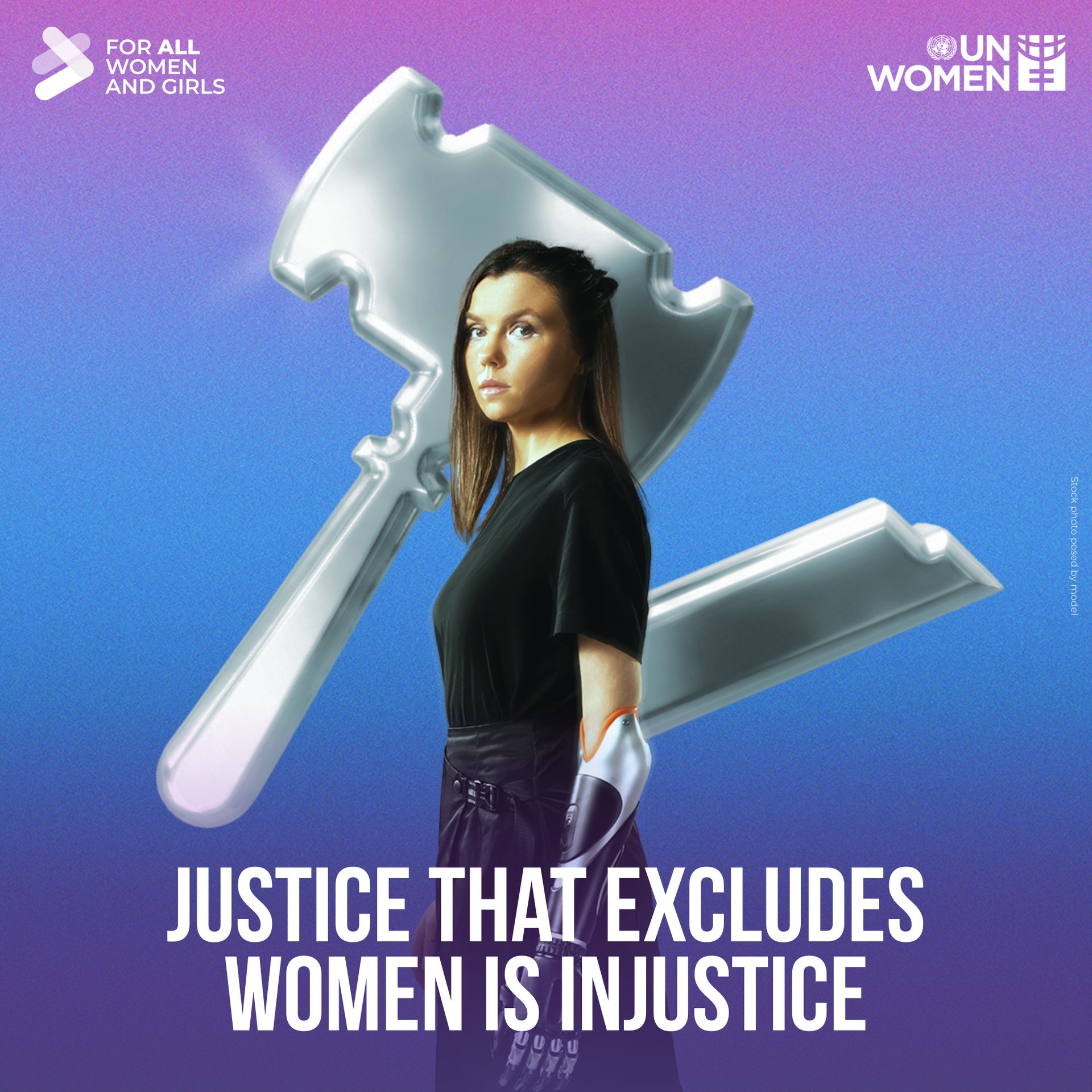
Justice and Rights for Women
Taking real action to empower every woman and girl
Rated 5 stars
★★★★★
International Women’s Day 2026, under the theme “Rights. Justice. Action. For All Women and Girls,” arrives at a time when the global community must confront a difficult truth: progress toward gender equality has been far slower than the promises made in international declarations and national policies.
Despite decades of advocacy and reform, no country in the world has fully closed the legal gap between men and women. Today, women globally hold only 64 percent of the legal rights available to men across areas that fundamentally shape human dignity and opportunity, including employment, economic participation, safety, family law, property ownership, and mobility.
This reality compels us to reflect not only on legal frameworks but also on the institutions and systems that shape public discourse particularly the media.
The 2025 Global Media Monitoring Project (GMMP) once again confirmed that women remain significantly underrepresented in news coverage globally. Women account for only a fraction of the voices quoted as experts, policymakers, and authorities in the news. When they do appear, they are often portrayed through the lens of personal circumstance rather than professional expertise.
In 2025, I had the privilege once more to serve as the National Coordinator for Sierra Leone for the GMMP through Initiatives for Media Development (IMdev), contributing to the global monitoring effort that examines how women are represented in the news. The exercise reinforced a reality that many media practitioners in Sierra Leone already understand: representation matters because it shapes perception, and perception influences power.
In recent months, several cases involving women have dominated national discourse, sparking debate across communities, courtrooms, and media platforms. These stories have raised important questions about accountability, institutional integrity, and the ability of justice systems to protect the vulnerable. They have also exposed the persistent structural and cultural barriers that many women and girls still face when seeking protection, fairness, and dignity.
The media has a critical role to play in bringing such issues to light. Journalism must continue to investigate, report, and amplify the voices of those whose rights have been violated. Transparency and scrutiny are essential pillars of democratic accountability.
Yet the media's responsibility extends further.
If the public narrative consistently presents women primarily as victims of violence, scandal, or social vulnerability, it risks obscuring the broader reality of women’s leadership and contributions across society. Sierra Leonean women are economists, entrepreneurs, policymakers, academics, innovators, and community leaders shaping the country’s development. Their expertise and leadership deserve equal visibility in our national discourse.
This is where the theme “Rights. Justice. Action.” becomes particularly significant.
Rights must be protected not only through legislation but through institutions that function effectively and fairly. Laws alone do not guarantee equality; they must be enforced consistently and without influence.
Justice must be credible. Public confidence in the rule of law depends on the assurance that accountability applies equally to all, regardless of power, status, or connections.
Action requires leadership across sectors. Governments must strengthen institutions. Civil society must continue to advocate. And the media must ensure that the stories it tells reflect the full spectrum of women’s realities not only their vulnerabilities but also their authority, expertise, and leadership.
For Sierra Leone, the path forward is clear. The country has made meaningful strides through legislative reforms and growing recognition of women’s leadership in public life. However, true equality will require sustained commitment to strengthening justice systems, confronting harmful social norms, and ensuring that public discourse accurately reflects the contributions of women and girls.
International Women’s Day should therefore be more than a moment of celebration. It should serve as a moment of reflection and accountability a reminder that equality is not achieved through declarations alone but through consistent and deliberate action.
The message of International Women’s Day 2026 is therefore both simple and profound: rights must be guaranteed, justice must be credible, and action must be sustained.
Only then will women and girls everywhere, including in Sierra Leone, be able not merely to claim equality, but to live it.
About the Author
Lolo Yeama Sarah Thompson-Oguamah is a Sierra Leonean media development specialist, journalist, and strategic communications expert with over two decades of experience in journalism, public policy communication, and media reform. She is the Founder and Chief Executive Officer of Initiatives for Media Development (IMdev) and currently serves as Managing Director of the Sierra Leone News Agency (SLENA). Yeama has led and supported numerous national and international communication initiatives in partnership with governments, development partners, and civil society organizations, focusing on governance, gender equality, civic engagement, and public accountability. In 2025, she served as the National Coordinator for Sierra Leone for the Global Media Monitoring Project (GMMP) through IMdev, contributing to the global assessment of gender representation in the news. Her work continues to advocate for ethical journalism, inclusive storytelling, and stronger media institutions in Sierra Leone.