
Moratorium on Fuel Stations: A Necessary Pause or a Delayed Reckoning?
Yeama Sarah Thompson
4/11/20263 min read
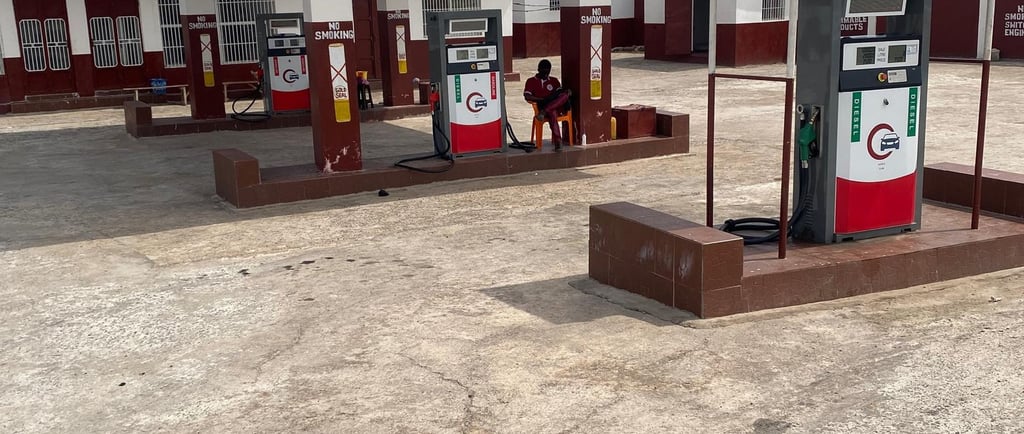
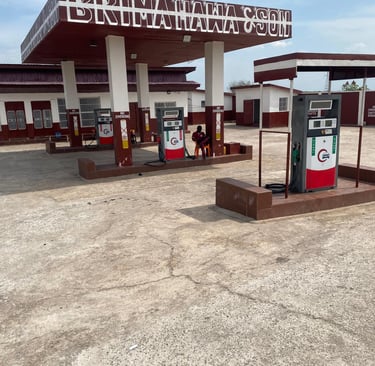
On 4th March 2026, the National Petroleum Regulatory Authority (NPRA) announced an immediate nationwide moratorium on the construction of fuel stations. It was a strong statement clear, decisive, and framed in the public interest.
But if you spend any time on the road, you quickly realise: this story did not begin on March 4. And it certainly will not end there.
I have been travelling across the country in recent weeks from Freetown through Waterloo and up-country, and what you see is difficult to ignore. Fuel stations are no longer just increasing in number; they are appearing in patterns that raise serious questions.
Take the highway through Waterloo. You drive a short distance and pass one station. Then another. Then, within metres, yet another, sometimes directly opposite each other, competing for the same narrow stretch of road. It stops feeling like planning and starts to look like a free-for-all.
Then you arrive in Makeni, and the situation becomes even more unsettling.
Here, the issue is not just clustering, it is siting. Fuel stations are being squeezed into spaces that defy basic safety logic. You see them pressed up against bakeries, where heat and open flames are part of daily operations. You see them sitting beneath high-tension power lines. These are not hypothetical risks. They are visible, everyday realities.
And yet, on paper, Sierra Leone has fewer than one hundred registered fuel stations nationwide. That number, taken in isolation, does not suggest excess. But numbers do not tell the full story. Distribution does.
When multiple stations are concentrated within the same corridor and appear in locations that raise immediate safety concerns, the issue is no longer about how many exist, but about how they are approved.
The NPRA, led by Brima M. Baluwa Koroma, is responsible for ensuring that fuel infrastructure meets strict safety and planning standards. Those standards exist for a reason: to protect lives, property, and the integrity of urban development.
So how did we get here?
There is no clear evidence that Sierra Leone has experienced a dramatic surge in vehicle ownership or fuel consumption to justify this pace of expansion. The roads are busier, yes, but not exponentially so. Which raises a difficult but necessary question: is this growth driven by demand, or by opportunity?
Because when infrastructure expands faster than needed, and in patterns that ignore spatial logic, it begins to resemble speculation. And where speculation thrives, regulatory gaps often follow.
This is not to suggest wrongdoing without evidence. But it is to say that the system must be strong enough to withstand scrutiny. Licensing processes must be transparent. Site approvals must be technically justified. And decisions must be coordinated, not fragmented, across institutions.
The safety implications are immediate.
Sierra Leone has already lived through the trauma of the Freetown fuel tanker explosion, a tragedy that claimed lives and left a lasting mark on the national psyche. That incident did not involve a fuel station, but it served as a stark reminder of how dangerous petroleum can be when things go wrong.
Now imagine that risk multiplied by poor siting, by clustering, by proximity to homes and businesses.
In petroleum infrastructure, distance is not a luxury. It is a safeguard.
This is why the moratorium matters.
By halting new construction and nullifying pending applications, the NPRA is, in effect, pressing pause. It is acknowledging that something in the system requires correction. Its commitment to reviewing compliance, particularly around separation distances and site suitability, is a necessary step.
But a pause is not a solution.
What happens next will determine whether this moment becomes a turning point or just another announcement.
A nationwide audit of existing fuel stations is essential, not just a desk review, but a physical assessment of where these stations are and whether they meet safety standards. High-risk locations must be addressed decisively. Licensing criteria should be made public, so that citizens understand not just what is approved, but why.
And perhaps most importantly, planning must become coordinated. The NPRA cannot operate in isolation. Local councils, urban planners, and environmental authorities must be part of a unified system that ensures development follows logic, not convenience.
Because right now, the public is drawing its own conclusions.
People see fuel stations appearing in places that do not make sense. They see multiple stations rising along the same road. They see patterns that feel inconsistent, even if procedures were technically followed.
Perception matters. And perception is shaped by reality.
The March 4 (https://pra.gov.sl) moratorium is an opportunity to reset both.
Sierra Leone is growing. That growth should be welcomed. But growth without structure is not progress; it is risk.
The question is no longer whether we need more fuel stations.
It is whether the ones we have and those we may approve in the future are safe, necessary, and planned with the seriousness that petroleum infrastructure demands.
Because on the road, where policy meets reality, the margin for error is not theoretical.
It is measured in lives.