
From the Strait of Hormuz to MY Freetown Streets: Why Sierra Leone Must Rethink Its Fuel Future
Yeama Sarah Thompson
3/16/20263 min read
As tensions escalate across the Middle East and the ongoing conflict involving Iran continues to capture global attention, many Sierra Leoneans may view these developments as distant geopolitical events. Yet, in today’s interconnected world, crises unfolding thousands of miles away often find their way into our daily lives in very tangible ways.
The Middle East remains a central pillar of the global energy system. Much of the world’s oil passes through narrow maritime routes, particularly the Strait of Hormuz, one of the most strategic energy chokepoints in the world. Any instability in that region quickly reverberates through global markets. Oil prices rise, shipping insurance premiums increase, and global supply chains tighten.
For countries like Sierra Leone that depend almost entirely on imported petroleum products, the consequences are immediate and visible.
Fuel prices have now risen at the pump. Transportation costs are climbing, prompting commercial drivers to adjust fares. The cost of moving food and goods from rural farms to urban markets is increasing, placing additional pressure on already stretched household budgets. Fishermen are paying more to fuel their boats, while businesses and homes relying on generators, especially during the March dry season when electricity demand surges, are facing significantly higher operating costs. Gradually, what begins as a geopolitical crisis in another region evolves into a tangible cost-of-living burden felt across households and communities in Sierra Leone.
The current global climate, therefore, raises an important national conversation: how can Sierra Leone reduce its vulnerability to external fuel shocks?
Interestingly, part of that conversation has already begun in symbolic but meaningful ways.
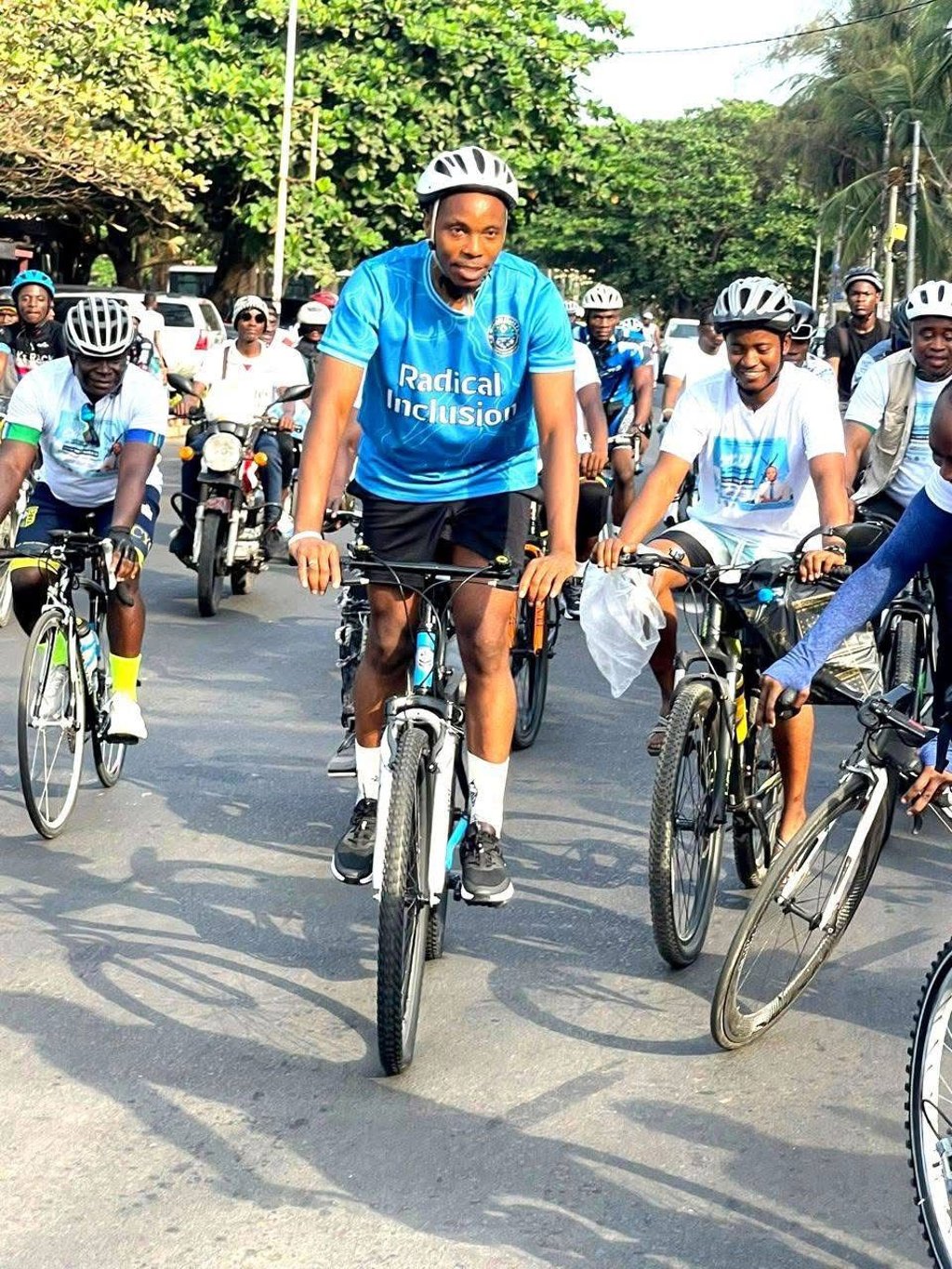
Over the weekend, Chief Minister Dr. David Moinina Sengeh led a cycling activity through the streets of Freetown. While the event was framed around wellness and environmental consciousness, it also carried a deeper policy message: Sierra Leone must begin to think creatively about reducing dependence on fuel-intensive transportation.
Cycling may appear simple, but it represents a broader shift in thinking.
Cities across the world, from Kigali to Copenhagen, are investing in bicycle lanes, pedestrian-friendly infrastructure, and low-carbon mobility systems. These initiatives are not only about climate change; they are also about economic resilience, public health, and urban efficiency.
In Sierra Leone, where fuel imports place constant pressure on foreign exchange and national budgets, encouraging alternative forms of mobility could deliver multiple benefits. Reduced fuel consumption means less exposure to volatile international oil prices. It also lowers transportation costs for individuals and reduces environmental pollution in already congested urban centers.
Beyond cycling, the broader lesson is about diversifying how we power our economy.
Investments in renewable energy, improved public transportation systems, and more efficient urban planning could significantly reduce Sierra Leone’s vulnerability to global energy shocks. Solar energy initiatives expanded electrification projects, and smarter transport policies all contribute to a future in which distant conflicts have a less immediate impact on local livelihoods.
The unfolding tensions in the Middle East also remind us that the global order is shifting.
We are increasingly living in a multipolar world, where multiple global and regional powers compete for influence across strategic regions, resources, and trade routes. The Middle East today reflects overlapping spheres of influence, where regional conflicts are intertwined with wider geopolitical rivalries.
These dynamics affect global energy flows, trade patterns, and investment decisions. For small and open economies like Sierra Leone, this reality reinforces the importance of building domestic resilience while remaining engaged in global diplomatic and economic frameworks.
In this context, even small policy signals such as encouraging cycling, promoting energy efficiency, or investing in alternative energy take on greater significance. Earlier today, in response to a lighthearted Facebook post by a colleague, journalist John Baimba Sesay, who remarked that people should not be surprised to see him using a kekeh as an alternative means of transport, I jokingly replied that I might soon be spotted on a tricycle myself. While said in jest, the exchange reflects a broader conversation.
They represent steps toward a future in which Sierra Leone is less vulnerable to external shocks and more capable of managing the ripple effects of global instability.
A war thousands of miles away has influenced fuel prices in Freetown, but how we respond to that reality is ultimately within our control. By embracing innovation, promoting sustainable mobility, and diversifying our energy strategies, Sierra Leone can transform vulnerability into opportunity.
Sometimes, the path to resilience begins with something as simple as a bicycle ride through the city.
Abi – in my Salone Naija voice.
About the Author
Lolo Yeama Sarah Thompson-Oguamah is the Managing Director of the Sierra Leone News Agency (SLENA) and Founder of Initiatives for Media Development (IMdev). She works on governance, media development, and public accountability initiatives across Sierra Leone and the region.